Working Out The Kinks
The Media still reiterates that Eurocentric standards are dominant in society’s view. African American women may not be mainstream in media in comparison to Caucasian women but over the years studies show women have low self-esteem because of the standards that society places on them. This is applicable to African American women: separate sets of standards of hair and beauty exist that women of color are unconsciously aware of. My own personal experiences of this show that as a woman of color, I have been through different hair phases which I believe made me more attractive not realizing that I was attempting to fulfill standards and ideas of beauty previously set before my own time.
It is a common story owned by African American women of perms and weaves — covering up her hair because she didn’t feel like it was beautiful. I tried to fit into the stigma of beauty when I felt the most uncomfortable. I went to school and tried to take out my hairstyles that my mom took her time to style, dedicated to having my hair reach its potential length. I went to elementary school with stiff greasy hair. I wondered why the other girls hair blew in the wind at recess, and why mine was stiff as bricks in the winter. The glory days were when my sister returned home from college and straightened my hair every week, no perm, just hair that finally blew in the wind, that everyone complimented on. No other style made me feel attractive as I did when she did my hair.
There are not enough fingers and feet in the world to count how many times I yelled in the mirror with the greatest frustration admitting I hated my hair. Screaming and begging the gods from hair heaven to send me new hair that I could manage on my own and not sit around waiting for others to do. When my hair reached a satisfying length, I realized I would soon be going to college and no one would be around to do my hair. So I walked to the hair salon and cut it off. All of it. Into a short Mohawk. I hated it, but I dealt with it. Even dealt with that awkward growing back phase my whole two months of my freshman year of college. My identification card was the proof that I was going through some rough hair times. I noticed all the girls at school had weaves that were touching their butts, so after three months I went home and got me a nice curly weave. For the next two years I experimented with weaves, hair thinning, and weird textures. I was fed UP! Not to mention also broke, because weave was not affordable and I couldn’t keep up with the college girls (neither could my refund check).
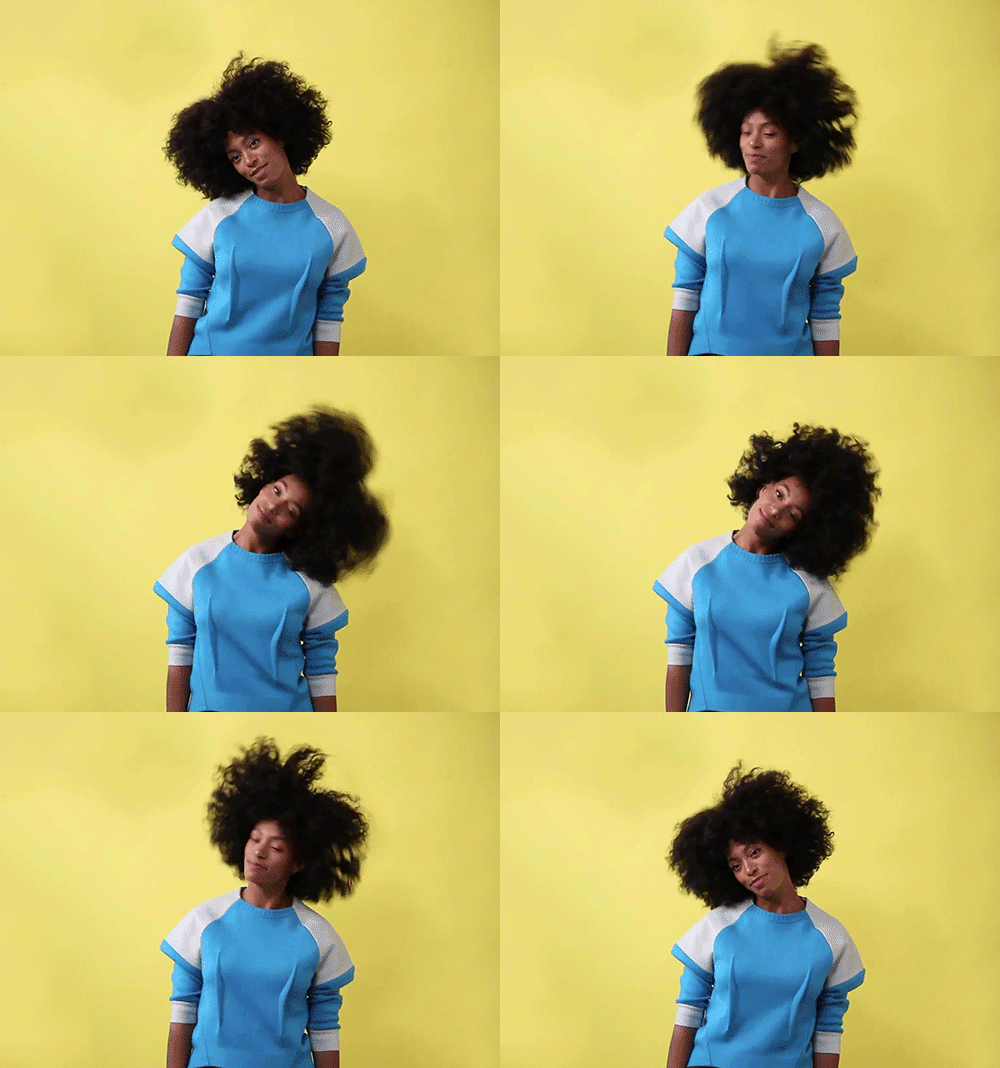
At 21, I finally began to embrace my natural self. Box braids and natural hairstyles only. No more styles that would cause me a headache. “Beauty is Pain” was no longer applicable to my life. I never felt more free and beautiful than when I wore my big afro or big pony puffs on top of my head. Natural curls have become me and I enjoy locking in moisture for perfect twist-outs. The best part is when you see other woman and they become inspired by your brave movement to be the best natural you possible. I realized why it was so hard for us to become accustomed to revealing the natural us. For years the idea that our hair wasn’t beautiful was instilled in African American women. Women wore scarves on their head to hide their hair because they didn’t meet the criteria of good hair. Even in the workplace they deemed it unacceptable to wear your natural hair, or even braids. I found this ridiculous but for many years it would leave scars on the generations on women of color to come.
The story almost ended well, but there are always shallow compliments that I try hard to disregard but it becomes hard. Just to clear the air…. this is not “a little natural thing I got going on”. Black women don’t “go natural”…we are natural. If we ever went to anything it was to the Eurocentric standard of beauty. My self-esteem has been boosted tremendously, and I am finally 100% comfortable with my hair. From 21 on to the rest of my life… I gave society’s opinion a middle finger.
My natural hair and I are doing just fine.
Keirsten Lewis
Pitched Entry